


As the world looks to the battlefields of Ukraine in early 2026, it is clear that the conflict has entered a phase characterized by a high degree of technological adaptation, exhausting intensity, and strategic patience. Almost four years after the start of the full-scale Russian invasion, the situation on the front lines is not developing according to the old textbooks of linear warfare from the last century. At the beginning of 2026, it is once again confirmed that the key to success is not only the size of the forces and the ability to innovate, but also how Ukraine and Russia are able to implement innovations on the battlefield. Since February 2022, the Ukrainian army has undergone a transformation that has changed the overall perception of modern defense. The initial opinions of some experts and a skeptical part of the public that the country would fall within days or weeks have not only failed to materialize, but today, on the threshold of 2026, we are faced with a force in the form of the Ukrainian army, which is the most experienced in modern warfare on the entire European continent.
As far as the Russian military is concerned, 2026 is unlikely to bring any fundamental change in strategic thinking. The Russian military continues to stubbornly pursue a war of attrition, relying on massive domestic production of drones and improved missile systems. The scenario we observed during previous winters is repeating itself now. In 2026, the Russian command is again targeting the country’s energy infrastructure in the hope that this approach will not only undermine the morale of Ukrainians, but also disrupt the Ukrainian economy and its functioning, burden Ukrainian air defenses, and deplete Ukraine’s financial resources due to the need to rebuild infrastructure. The goal of Russia’s actions is therefore not only psychological but also material. However, as developments in the first weeks of 2026 have shown, Ukraine’s air defense, now fully integrated with modern artificial intelligence systems, has been highly successful in eliminating these threats.
In 2026, Ukraine will strive not only to prevent Russian troops from advancing, but also to hold on to the areas that the Ukrainian army managed to capture at the end of 2025. An example is Kupyansk, where the Ukrainians managed to surround Russian troops with a surprise attack and hold their positions. The unexpected Ukrainian offensive on Kupyansk is an example of how the Ukrainian army can not only defend its territory but also capture it. The Ukrainian army has managed to create a zone within a radius of 20-25 km from the front line near Kupyansk, into which Ukrainian drone units do not allow Russian vehicles to enter, and a radius of approximately 1 km from the city, where Russian infantry cannot operate. Kupyansk will be an important point on the front line that Ukrainian troops will try to hold in 2026. However, the constant pressure from the Russian army across the entire front line shows that in 2026, the Ukrainian army will have to defend virtually the entire front line, where Russian troops are relentless in their efforts.
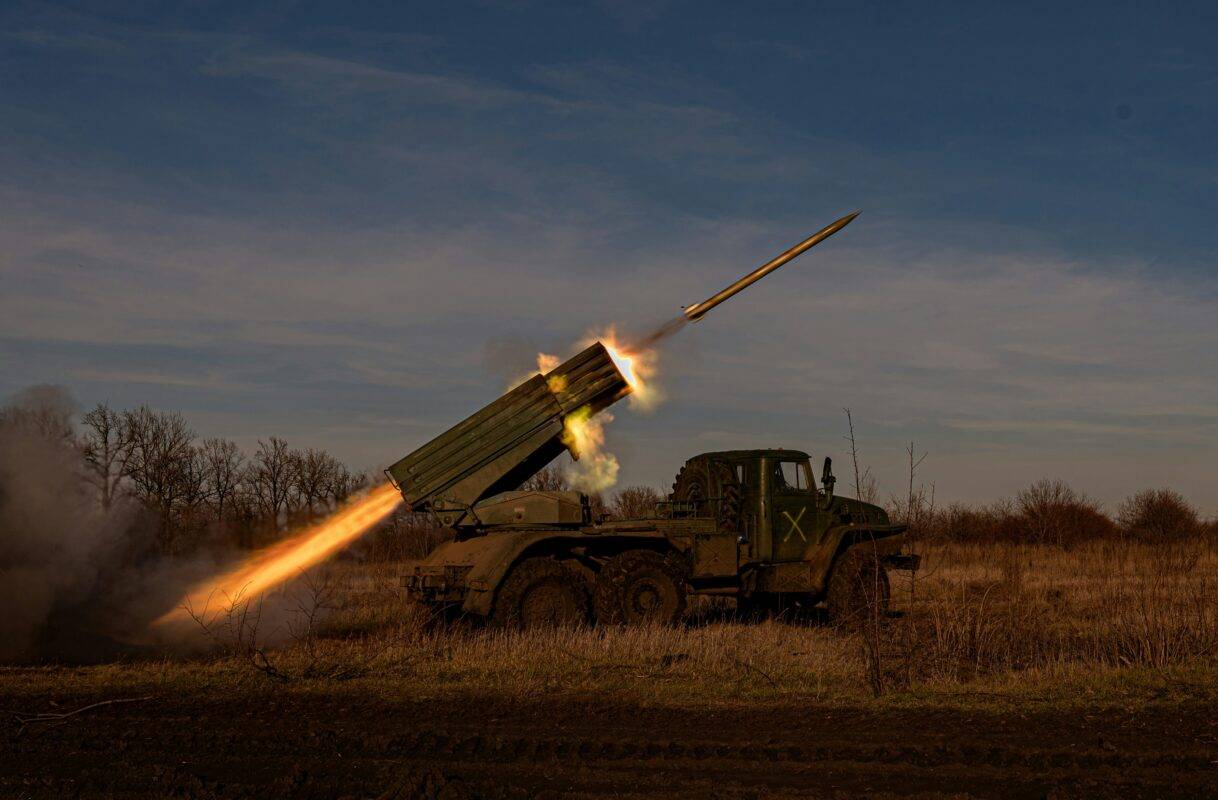
Source: Unsplash.com
In 2026, Ukraine will also continue its attacks on strategic targets on Russian territory. Ukraine most often uses long-range drones and targets oil refineries, fuel depots, gas terminals, military industrial complexes, and air defense systems in order to create better opportunities for attacks on Russian strategic infrastructure. In 2026 alone, Ukraine managed to hit an oil refinery in the Krasnodar region and also successfully attacked the Energia plant in Yelets, which manufactures components for Russian drones and long-range missiles. According to available data from 2025, Ukraine’s drone strikes on Russian territory in the second half of 2025 managed to knock out 38% of Russia’s oil refining capacity, which is important for supplying fuel to frontline units. However, Russia is gradually repairing the damage caused by the attacks, as Ukrainian strikes on Russian territory do not always permanently disable Russian strategic infrastructure. Moreover, according to the latest data, only about 10% of drones or long-range missiles fired by the Ukrainian armed forces at Russian strategic infrastructure hit their target, and an even smaller number cause real damage.
In order to repel Russian pressure on the front line, it will also be necessary in 2026 to maintain supplies of long-range missiles from Western allies, such as ATACMS systems with improved range, British-French Storm Shadow/SCALP, and German Taurus missiles, which are needed to neutralize Russian supply routes and logistics hubs in the Russian rear. If Ukraine maintains supplies of these missiles, it will have a direct impact on Russian frontline units, which would thus be left without regular supplies of ammunition, fuel, and fresh reinforcements.
In 2026, success in maintaining Ukraine’s territory will depend on the Ukrainian army’s ability to respond to the numerical superiority of the Russian army and the success of strikes on strategic infrastructure, whether deep inside Russian territory or behind the front line. This can be aided by more effective implementation of innovations in the Ukrainian army, as the Russian army is also constantly striving to develop its military technologies and is successful in implementing them in the army. The static front, which is hardly moving at all, is causing losses on both sides, which is to the detriment of Ukraine, which is suffering from a shortage of new recruits. This is another reason why Ukraine will need its Western allies to continue supplying components for electronic warfare and precision-guided munitions, which have the potential to partially compensate for the shortage of manpower. In 2026, Russia will be counting on time and hoping for the Ukrainian army and economy to tire and for the democratic world’s support for Ukraine to wane. Stable and continuous assistance from allies will therefore be an important factor in 2026 in preventing the Russian army from advancing and inflicting heavy losses on Ukrainian defenders. Recent talks in Abu Dhabi have indicated that a peaceful resolution to the war is not yet in sight and that Ukraine will continue to defend its territory against Russian aggression in 2026.